
Kerala, India
Kasargod
Explore the historical wonders, local food, and cultural highlights of Kasargod.
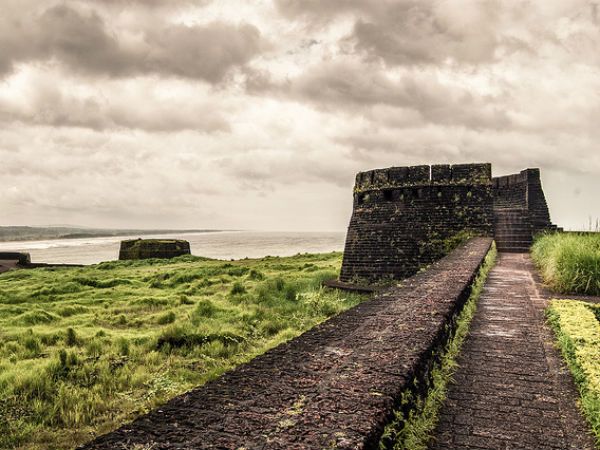
Travel to Kasargod: History of Kasargod
Situated on the northern part of the western coast of the state, Kasargod has been famous since ancient times. Many Arab travellers who arrived in Kerala between the ninth and fourteenth centuries AD visited Kasargod, as it was then an important commercial centre. They referred to this area as Harkwillia. Mr. Barbose, the Portuguese traveller who visited Kumbla near Kasargod in 1514, recorded that rice was exported to the island of Male, from where coconuts were imported. Dr. Francis Buchanan, who was the family physician of Lord Wellesley, visited Kasargod in 1800. In his travel notes, he included information about the political and community conditions of places such as Athiparamba, Kavvai, Nileshwar, Bekkal, Chandragiri and Manjeshwar.
Kasargod was part of the Kumbala Kingdom, which consisted of 64 Tulu and Malayalam-speaking villages.
When the Vijayanagar Empire attacked Kasargod, the region was ruled by King Kolathiri, who had Nileshwar as his headquarters. It is said that the characters appearing in Theyyam, the popular ritual dance of northern Kerala, represent those who helped King Kolathiri fight against the attack of the Vijayanagar Empire.
During the decline of that empire in the 14th century, the administration of this area passed into the hands of the Naikans of Ikkeri. They remained the rulers until the fall of the Vijayanagar Empire in the 16th century. Vengappa Naik then declared the independence of Ikkeri.
In 1645, Sivappa Naik took control and moved the capital to Bednoor. They therefore came to be known as the Bendoor Naiks. The Chandragiri Fort and Bekkal Fort are considered part of a chain of forts built by Sivappa Naik for the defence of the kingdom.
In 1763, Hyder Ali of Mysore conquered Bednoor and intended to capture the whole of Kerala. However, when his attempt to conquer Thalassery Fort failed, Hyder Ali returned to Mysore, where he died in 1782. His son, Tippu Sulthan, continued the attacks and conquered Malabar. According to the Treaty of Sreerangapattanam of 1792, Tippu surrendered Malabar, except Tulunadu (Canara), to the British.
The British acquired Canara after the death of Tippu Sulthan in 1799. Kasargod was part of Bekal Taluk in the South Canara district of the Bombay Presidency. Kasargod Taluk was formed when Bekal Taluk was included in the Madras Presidency on 16 April 1882.
Although Vengayil Kunhiraman Nayanar introduced a resolution in 1913 before the Madras Governor's Council demanding the merger of Kasargod Taluk with the Malabar district, it had to be withdrawn due to strong opposition from members of Karnataka. In 1927, a political convention held in Kozhikode passed a resolution reaffirming the earlier demand.
In the same year, an organisation called Malayalee Seva Sangham was formed. Thanks to the efforts of many eminent people, including K. P. Keshava Menon, Kasargod became part of Kerala following the reorganisation of the states and the formation of Kerala on 1 November 1956.
National Movement
Kasargod played a prominent role in the National Movement for the freedom of the country. Mohammed Sherul Sahib and Kandige Krishna Bhat were prominent leaders of the independence movement. Umesh Rao, K. M. Krishnan Nambiar, Shreesankarji, Naranthatta Raman Nair, A. C. Kannan Nair, T. Gopalan Nair and Meloth Narayanan Nambair were prominent freedom fighters.
Agrarian struggles to end the exploitation and oppression of landlords and local chieftains were also part of the National Movement. Various struggles, including the Kadakom Satyagraha, undertaken for the upliftment of castes and tribes, also supported and strengthened the National Movement.
How to Reach Kasargod
By Air
The nearest airport to Kasargod is in Mangalore, approximately 50 km away, while Kochi Airport is around 420 km to the south.
By Train
Kasargod town has a railway station that is connected to several important cities in the state as well as other parts of the country.
By Road
Kasargod is well connected to other cities in the state and different parts of India by motorable roads. Buses operated by both private and state transport operators are available to different cities and towns.
Shopping in Kasargod
The shopping areas in Kasargod are fairly limited. If you are wondering what to buy in Kasargod, you can always look for small local items available at roadside stalls. They make ideal souvenirs for friends and family back home. Kasargod does not have many impressive shopping malls or large showrooms, but that is where its charm lies. The place remains largely untouched by commercialism and urban lifestyles.
Local artisans in Kasargod are famous for making beautiful metal artefacts. Kasargod is particularly known for its production of metal bells. Different types of containers, vessels and beautiful lamps are famous here and sell quickly. So, if you are shopping in Kasargod, make sure to buy these spectacular metal items along with other local collectibles.
Hotels in Kasargod
- Couvery Lodge Kasargod
- Elite Tourist Home Kasargod
- Fort Palace Tourist Home Kasargod
- Hotel City Palace Kasargod
- New Happy Tourist Home Kasargod
- Shri Durga Resort Kasargod
- Welwisher Boarding & Lodging Kasargod
- Elite Tower Hotel Kasargod
- Fort Land Tourist Home Kasargod
- Fort Vihar Hotel Kasargod
- National Tourist Home Kasargod
- Sa Adiya Lodge Kasargod
- Sunil Lodge Kasargod
Plan Your Trip
Get a bespoke itinerary in 24 hours.
Need Help? We Are Here To Help You
We Can Tailor-Make a Special Itinerary For You. Contact our specialists directly.