Maharashtra, India
Pune
Pune is a lively cultural and educational city in Maharashtra, known for its historic f...
History of Pune
Over the centuries, Pune has been ruled by several dynasties. The earliest evidence, including copper plates from 758 AD and 768 AD, indicates that the Rashtrakutas ruled this region. During this period, Pune was known as Punaka Pune Vishaya and Punya Vishaya. Later records from 960 AD and 963 AD refer to it as Punaka and Punaka Desha.
According to the Pune Gazetteer, the name Pune is associated with Punya, meaning a holy place. In Hindu tradition, the confluence of two rivers is considered sacred. Therefore, Pune, situated at the confluence of two rivers, came to be associated with the name Punyanagari.
After the Rashtrakutas, Pune was ruled by the Yadava dynasty and later remained under Muslim rule until the middle of the 17th century.
Shivaji and the Maratha Era
With the rise of Chhatrapati Shivaji and the establishment of the Maratha Empire, Pune gained great importance. Shivaji spent his early childhood in Lal Mahal, a palace built by his father Shahaji. His mother Jijabai also lived there for several years.
Dadaji Konddev, Shivaji's mentor, played an important role in developing Pune. He also established the Kasba Ganapati temple, which became the Gram Daivata of Pune.
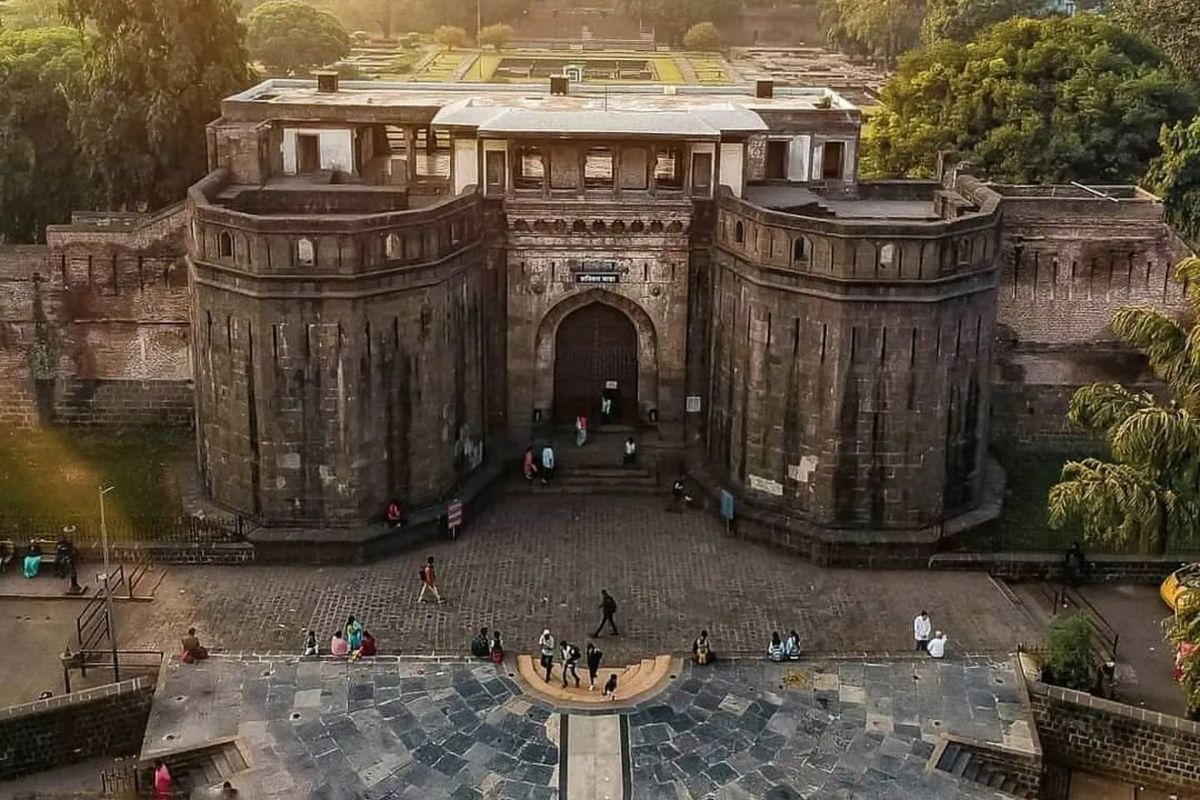
Pune gained further importance during the rule of Peshwa Bajirao I, who governed from 1720 to 1740. During his period, the famous Shaniwar Wada was constructed. Nanasaheb Peshwa later continued the development of Pune and encouraged the creation of several Peths or residential areas.
Nanasaheb also contributed to the development of the city by constructing the Parvati Temple complex and developing a water-supply system from Katraj Lake.
British Period
Following internal conflicts within the Maratha administration, Maratha power came to an end in 1818 when the British, led by Mount Stuart Elphinstone, defeated them and established British rule in the region.
During the 19th century, Pune emerged as an important centre of education and intellectual activity. Deccan College was established in 1851, while several educational institutions including Fergusson College and the Deccan Education Society contributed to the educational development of the city.
Lokmanya Bal Gangadhar Tilak played an important role in the freedom movement. He founded the newspapers The Mahratta in English and Kesari in Marathi, using them to promote education, Swadeshi and Swaraj.
Social and Educational Movements
Pune was associated with several important social, educational, political and literary movements. Gopal Krishna Gokhale established the Servants of India Society, while Maharshi Dhondo Keshav Karve worked extensively for women's education and established India's first women's university, SNDT Women's University.
Mahatma Phule also worked for women's education and the upliftment of disadvantaged communities. Pune therefore became an important centre for social reform, education, politics and literature.
How to Reach Pune
By Air
Pune Airport is located in the Lohagaon area, approximately 10 km northeast of the city. Direct flights connect Pune with major Indian cities such as Delhi, Mumbai, Chennai and Bangalore. The city is also connected by direct flights with Dubai and Singapore.
By Train
Travelling to Pune by train is a convenient option. A well-developed railway network connects Pune with different parts of India.
By Road
Pune is well connected by road with major cities of Maharashtra and other parts of India. Regular bus services connect Pune with cities such as Mumbai and Nashik.
Shopping in Pune
Shopping in Pune offers a mix of traditional markets, modern shopping areas, boutiques and handicrafts.
- Laxmi Road: Famous for jewellery, sarees and traditional shopping.
- M.G. Road: A popular shopping and window-shopping destination.
- Dhole Patil Road: Known for boutiques and modern shopping options.
- Koregaon Park: Offers boutiques and contemporary shopping experiences.
- Fergusson College Road: Popular for shops and shopping centres.
- Chor Bazaar: Known for inexpensive and unusual items.
- Fashion Street: Popular for affordable clothing and accessories.
Culture of Pune
Pune represents Marathi culture and traditions, with strong importance given to education, arts, crafts and theatre. The city is associated with the poet-saints Tukaram and Jnaneshvara.
Pune has also been home to prominent freedom fighters and intellectuals. The city is an important centre of Hindustani classical music and hosts the famous Sawai Gandharva music festival.
Pune is often regarded as the cultural capital of Maharashtra and is known for combining its traditional heritage with modern development.
Festivals of Pune
Ganesh Mahotsav
Ganesh Mahotsav was popularised by Lokmanya Tilak and is celebrated with great enthusiasm throughout Pune. The city has numerous Ganesh mandals, with Dagdusheth Halwai Ganpati being one of the most famous.
Sawai Gandharva Festival
The Sawai Gandharva festival began in 1960 and features Indian and international performers. It is traditionally held in December over several days.
Osho Festival
The Osho Festival attracts visitors and followers from different parts of the world and is held at the Osho Ashram in Koregaon Park.
Places to Visit in Pune
Kasba Ganpati
Kasba Ganpati is considered the Gram Daivat of Pune and holds an important position in the city's Ganesh Utsav celebrations. The temple is located near Lal Mahal.
Parvati Hill
Parvati Hill is one of Pune's famous landmarks. A staircase of 108 steps leads to the temple complex dedicated to Parvati and Devadeshwar. Other temples dedicated to Vishnu, Ganesh and Kartikeya are also located here. The hill offers panoramic views of Pune.
Gurudwara, Ganesh Peth
The Gurudwara in Ganesh Peth attracts Sikh devotees and visitors. It is open to people of all religions. Visitors are required to remove their shoes and cover their heads before entering.
Omkareshwar Temple
Located in Shaniwar Peth, Omkareshwar Temple is known for its stone architecture. The approximately 250-year-old temple survived the Panshet floods of 1962.
Hotels in Pune
- The Centurion Hotel
- Hotel Sapna Pune
Plan Your Trip
Get a bespoke itinerary in 24 hours.
Need Help? We Are Here To Help You
We Can Tailor-Make a Special Itinerary For You. Contact our specialists directly.