
Tamil Nadu, India
Rameshwaram
Explore the historical wonders, local food, and cultural highlights of Rameshwaram.
Travel to Rameshwaram
History of Rameshwaram
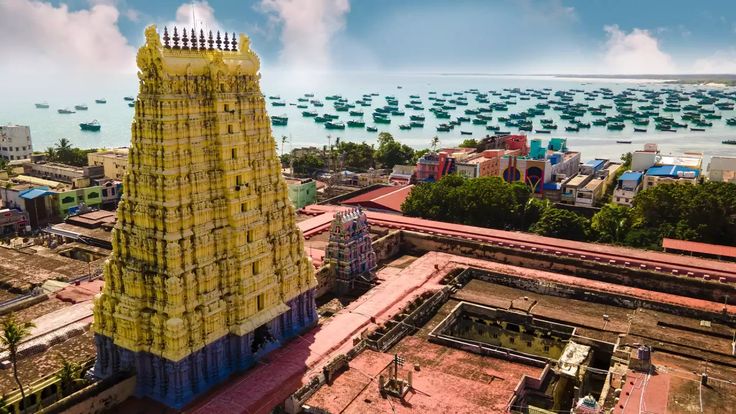
Rameshwaram is an important pilgrimage town situated on an island in the Gulf of Mannar. The Sri Ramanathaswamy Temple is located close to the sea on the eastern side of the island. The island is connected to the mainland at Mandapam by an impressive railway bridge and road bridge.
In ancient times, the shrine was a small thatched hut. Over the centuries, the small shrine gradually developed into the huge and magnificent structure that can be seen today.
Rulers and Development of the Temple
The Ramanathapuram region was ruled by different dynasties throughout history. The Pandya kings ruled the region until the 15th century. Later, the region came under the rule of the Nayaks of the Vijayanagar Empire, who governed it until around the 17th century.
The Sethupathis, who were former chieftains of the region, then came to power. These rulers made generous contributions to the development of art and architecture at the Rameshwaram shrine.
- Udayan Sethupathy
- Thirumalai Sethupathy
- Raghunatha Sethupathy
- Muthuramalinga Sethupathy
Statues of these rulers can be found inside the temple.
Mythology of Rameshwaram
According to Hindu tradition, the Sri Ramanathaswamy Temple is associated with the period of the Ramayana. Rameshwaram is connected with several events from the epic, particularly those described in the Sundara Kaandam.
Rama, the prince of Ayodhya, underwent fourteen years of exile along with Sita and Lakshmana. During their exile, Sita was abducted by Ravana, the king of Lanka. Rama and Lakshmana then began their search for Sita.
Hanuman and the Search for Sita
During the search, Rama met Sugriva and Hanuman. After regaining his kingdom, Sugriva sent search parties in different directions. Hanuman, Angada, Nala and others travelled south and reached Gandhamadhana Parvatham, in the area of present-day Rameshwaram.
From there, Hanuman made his famous leap across the ocean to reach Lanka and locate Sita, who was held captive in Ashoka Vana.
Hanuman gave Sita Rama's ring as proof that he was his messenger. Later, Sita gave Hanuman her Choodamani as a token to be presented to Rama.
Rama and the Temple of Shiva
After the battle with Ravana, Rama returned to the coast of present-day Rameshwaram along with Sita, Lakshmana and his army. According to tradition, Rama decided to consecrate a shrine dedicated to Shiva to purify himself from the sin of having killed Ravana.
Rama sent Hanuman to Mount Kailash to bring a Linga. As Hanuman had not returned when the auspicious time for the ceremony arrived, Sita prepared a Linga out of sand and the puja was performed. This Linga came to be known as Ramalinga.
When Hanuman returned, Rama also installed the Linga that Hanuman had brought from Kailash. This Linga was named Vishwalinga and, according to tradition, prayers and pujas should be offered to this Linga first.
The Sacred Theerthas
Rameshwaram is especially famous for its numerous Theerthas, or sacred water bodies. Many of them are located inside and around the main temple and hold special significance for pilgrims.
According to tradition, these sacred waters are associated with the feet of Rama and hold great religious importance.
Sri Ramanathaswamy Temple
The Sri Ramanathaswamy Temple is one of the most important sacred sites in Rameshwaram. It is renowned for its enormous corridors and intricately carved pillars.
The temple, in its present form, was built by different rulers during different periods. It also features large towers, or gopurams, and houses the worship of the Spadikalingam.
How to Reach Rameshwaram
By Air
The nearest airport is Madurai Airport, located approximately 163 km from Rameshwaram. From there, travellers can continue their journey by public or private transport.
By Train
Rameshwaram is connected by rail with Chennai, Madurai, Coimbatore, Trichy, Thanjavur and other major cities.
The Indira Gandhi Bridge connects Rameshwaram Island with the mainland at Mandapam.
By Road
Rameshwaram is well connected by road with Madurai, Kanyakumari, Chennai and Trichy. There are also road connections to Pondicherry and Thanjavur via Madurai.
Pamban Bridge
The Annai Indira Gandhi Road Bridge, also known as Pamban Bridge, connects Rameshwaram Island with the mainland. The bridge offers panoramic views of the sea, nearby islands and the parallel railway bridge.
Major Attractions
- Sri Ramanathaswamy Temple
- Agni Theertham
- Gandhamadana Parvatham
- Kodandaramar Temple
- Nambu Nayagi Amman Temple
- Five-Faced Hanuman Temple
- Jadayu Theertham
- Satchi Hanuman Temple
- Sukreevar Temple / Theertham
Beaches and Nature
Rameshwaram Island also offers several places ideal for excursions and seaside activities. Some of the notable beaches include Olaikuda, Dhanushkodi and Pamban.
Olaikuda Beach is surrounded by coral reefs and provides a beautiful setting to enjoy the sea. During winter, different species of migratory birds also visit the island.
Agni Theertham
Agni Theertham is located opposite the Sri Ramanathaswamy Temple. The seashore is approximately 100 metres from the main entrance of the temple and is considered sacred.
Pilgrims take ritual baths here and offer prayers for their ancestors.
Kodandaramar Temple
Kodandaramar Temple is located on the way to Dhanushkodi. According to tradition, this is the place where Rama crowned Vibhishana after he sought refuge with Rama.
Five-Faced Hanuman Temple
The temple is located approximately 2 km from the main temple. According to local tradition, it houses images associated with Rama, Sita and Hanuman that were brought from Dhanushkodi after the cyclone of 1964.
Gandhamadana Parvatham
Gandhamadana Parvatham is the highest point on the island. The site is associated with the footprints of Rama and offers a panoramic view of the surrounding area.
Plan Your Trip
Get a bespoke itinerary in 24 hours.
Need Help? We Are Here To Help You
We Can Tailor-Make a Special Itinerary For You. Contact our specialists directly.