Uttar Pradesh, India
Jhansi
Explore the historical wonders, local food, and cultural highlights of Jhansi.
Travel to Jhansi: History, Climate, Culture and How to Reach
History of Jhansi
Jhansi has a history closely associated with the Bundela kingdoms, the Marathas and British India. Maharaja Chattrasal Bundela of Panna was a capable administrator and a brave warrior. In 1729, Mohammed Khan Bangash attacked Chattrasal, but Peshwa Baji Rao I came to his aid and defeated the Mughal army. As a gesture of gratitude, Chattrasal offered Baji Rao I a part of his territory, which also included Jhansi.
Jhansi Under the Marathas
In 1742, Naroshankar was appointed the subedar of Jhansi. During his 15 years of administration, he expanded the Jhansi Fort, which had considerable strategic importance. The expanded section of the fort became known as Shankargarh. In 1757, Naroshankar was recalled by the Peshwa.
Later, Madhav Govind Kakirde and Babulal Kanahai served as subedars. In 1766, Vishwas Rao Laxman became the subedar of Jhansi and remained in office until 1769. After him, Raghunath Rao II Newalkar was appointed subedar.
Raghunath Rao II was an efficient administrator and increased the state's revenue. During his administration, the Mahalakshmi Temple and the Raghunath Temple were constructed.
Jhansi Fort and the Chandelas
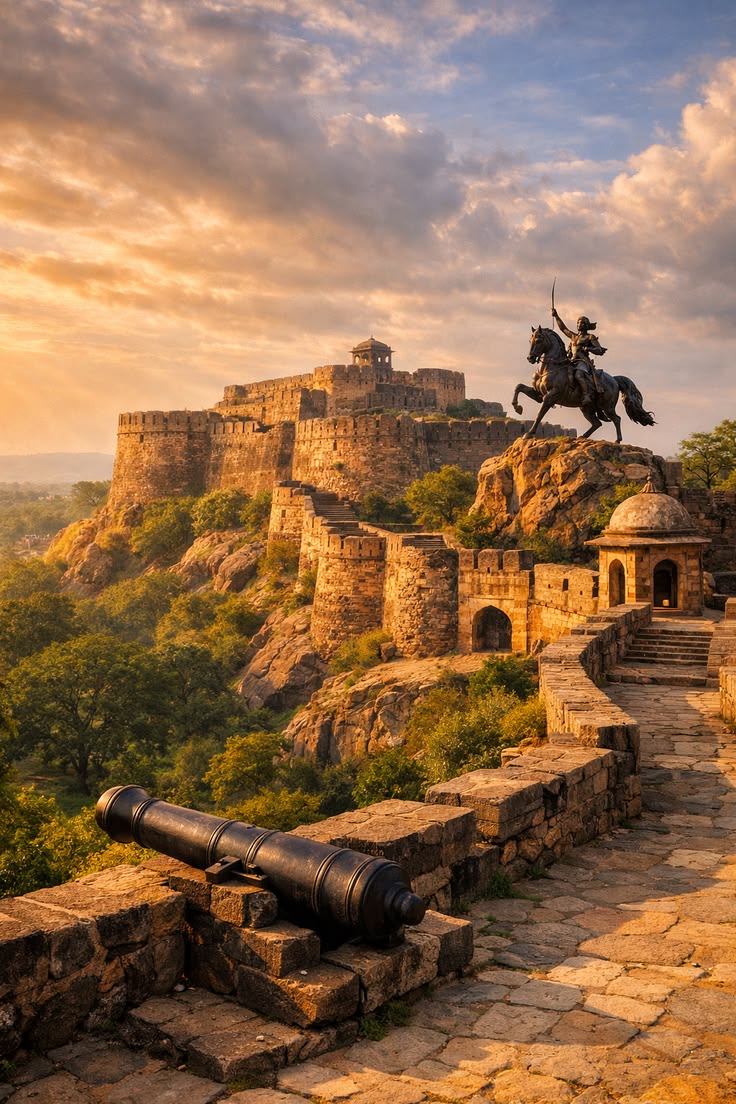
Jhansi was originally a fort of the Chandela kings, and the place was known as Balwant Nagar. During the 11th century, it lost some of its importance but regained prominence in the 17th century under the rule of Raja Bir Singh Deo of Orchha.
Raja Bir Singh Deo maintained good relations with the Mughal emperor Jahangir. In 1613, he built the famous Jhansi Fort. He died in 1627 and was succeeded by his son Juhar Singh.
Raja Gangadhar Rao and Rani Lakshmibai
After the death of Shiv Rao, his grandson Ramachandra Rao became the subedar of Jhansi. His administration was not considered efficient, and he died in 1835. Raghunath Rao III subsequently took office but died in 1838.
The British rulers then recognised Gangadhar Rao as the Raja of Jhansi. Under his administration, the condition of Jhansi improved, and the local population was satisfied with his rule.
In 1842, Gangadhar Rao married Mannikarnika, who later became known as Rani Lakshmibai. She became one of the most important figures in the resistance against British forces during the Revolt of 1857 and died in 1858 while fighting for India's independence.
Jhansi During British Rule
In 1861, the British government handed over the city and fort of Jhansi to Jiyaji Rao Scindia, and Jhansi became part of the Gwalior State. In 1886, the British regained control of the State of Jhansi.
Climate of Jhansi
Jhansi is located on the central plateau of India at an average elevation of approximately 284 metres. The region has predominantly rocky terrain and an extreme climate.
During summer, temperatures can reach approximately 48 °C, while in winter they can fall to around 1 °C. The rainy season generally begins around the third week of June and gradually decreases during September.
Winter begins after the monsoon and is generally more pleasant. Spring arrives around February, while summer begins around April.
Languages of Jhansi
The main languages spoken in Jhansi include Hindi, English and Bundeli. Bundeli is a language or dialect related to Western Hindi and is primarily spoken in the Bundelkhand region of Uttar Pradesh and Madhya Pradesh.
How to Reach Jhansi
By Air
The nearest airport is Gwalior Airport, located approximately 100 km from Jhansi. It is connected to several major cities in India.
By Train
Jhansi is well connected by rail with major cities across India. The main station is Jhansi Cantonment Railway Station. Express and superfast trains operate to New Delhi, Varanasi, Jaipur, Lucknow, Mumbai and Kolkata.
By Road
Jhansi is connected by road with cities such as Mathura, Delhi, Chandigarh, Kanpur, Lucknow, Varanasi, Agra and Chitrakoot. The city also has state-run and private bus services.
Fairs and Festivals of Jhansi
Jhansi hosts a week-long cultural festival that highlights the traditions, arts and crafts of the region. The event features a variety of cultural and artistic programmes.
Cultural Programmes
- Folk songs
- Traditional dances
- Mushairas
- Ghazals
- Local arts and handicrafts
Hotels in Jhansi
- Hotel Sita, Jhansi
Plan Your Trip
Get a bespoke itinerary in 24 hours.
Need Help? We Are Here To Help You
We Can Tailor-Make a Special Itinerary For You. Contact our specialists directly.