
Turismo em Madhya Pradesh, India
Ujjain
Ujjain é uma das cidades antigas mais sagradas da Índia, famosa pelo Mahakaleshwar Jyot...
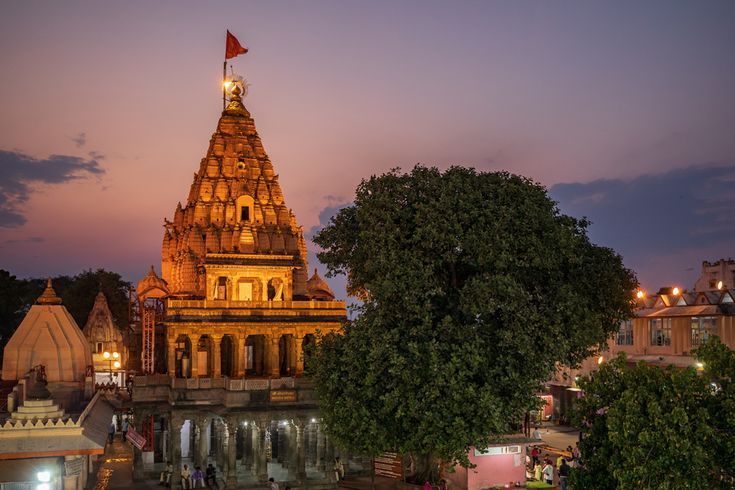
Travel to Ujjain: History, Culture and Places of Interest
Historical Perspective of Ujjain
The history of the ancient city of Ujjain is closely intertwined with legend. According to one legend, Shiva, the destroyer of the universe, descended to Mrityulok, the land of mortals, to defeat the demon king Tripura.
Another tradition states that Lord Krishna came to Ujjain to study under the great sage Sandipani Muni, who taught his disciples at the Sandipani Muni Ashram.
Apart from these myths, archaeological excavations at a site approximately 6 km north of the city have revealed pottery and iron objects dating back to the 8th century BC.
The Great Kingdoms
The period between the 6th and 3rd centuries BC witnessed the emergence of several ambitious kingdoms. Four major kingdoms, known as the Mahajanapadas, emerged in northern India: Avanti, Vatsa, Kausala and Magadha.
King Chandra Pradyota Mahasena ruled the kingdom of Avanti, with Ujjain as its capital. During the 4th century BC, the Mauryan ruler Chandragupta I ruled over Avanti.
The Great Ruler Ashoka and Buddhism
In the middle of the 3rd century BC, Ashoka became the governor of Avanti (Ujjain) and Taxila, in present-day Pakistan, at the age of 18 during the reign of his father, Bindusara.
Initially, Ashoka ruled harshly and used ruthless methods to annex neighbouring territories. However, in 257 BC he became a devoted follower of Buddhism.
He laid the foundations of numerous stupas, domed structures built to house Buddhist relics, particularly at Sanchi. He also built stupas in Ujjain, one of the first territories under his rule.
Stone and metal images of the Buddha have also been discovered in the district, confirming the influence of Buddhism in and around Ujjain.
The Golden Age
After Ashoka's death in 232 BC, his vast empire began to decline, making way for Indo-Greek and Scythian rulers.
During the 2nd century BC, several waves of the Sakas entered Madhya Pradesh and established the Kshatrapa line of rulers in Ujjain.
The Kshatrapas of Ujjain traced their lineage to Chastana. Indo-Greek influence extended towards Mathura and Ujjain until the establishment of the Gupta dynasty around AD 320.
Chandragupta Vikramaditya, also known as Chandragupta II, ruled approximately from AD 380 to 415. He defeated Rudradaman, the grandson of Chastana and the last ruler of that line.
Vikramaditya is associated with the beginning of the Vikram Samvat era, which begins 57 years before the Christian era. His famous court at Ujjain was renowned for poets and scholars, including the celebrated poet Kalidasa, author of the immortal play Abhigyan Shakuntalam.
Visitors from Distant Lands
During the 5th and 6th centuries AD, Ujjain was an important part of the Gupta Empire. The prosperous plains of northern India attracted the Huns, feared invaders from Central Asia.
Led by Toramana, they entered India around AD 465 and established a small empire.
In AD 533, Yashodharman of Mandsaur defeated them and forced them to retreat, allowing Indian rule to be restored.
In AD 606, Harshavardhana ascended the throne of Kannauj. His reign lasted approximately 41 years and he is regarded as one of the last great Hindu rulers to control a substantial part of the Indian subcontinent.
During his reign, the Chinese pilgrim Hiuen Tsang visited India to study Buddhism. He travelled extensively through Harsha's territories and left descriptions of Bundelkhand, Maheshwar and Ujjain, describing Ujjain as a city of splendour.
Harshavardhana died in AD 647.
The Rajputs and the Rulers of Malwa
After the Guptas, rival groups ruled the Gangetic plains. From the 7th century onwards, the Rajputs became politically active in the Malwa plateau.
The Paramaras rose to prominence during the 11th century until the Sultans of Mandu captured their last ruler, Siladitya.
Ujjain was invaded and plundered at different times by neighbouring rulers, including the Chalukyas of Gujarat, the Chandelas of Bundelkhand and various Rajput rulers, before facing further invasions from the west.
The Sultans Invade Ujjain
The Malwa plateau faced Muslim invasions from the late 12th century onwards. Iltutmish, the second ruler of the Slave dynasty, captured Malwa in AD 1234 and plundered Ujjain.
In AD 1305, Alauddin Khalji, the powerful ruler of the Khalji dynasty of the Delhi Sultanate, captured Ujjain.
Muhammad-bin-Tughlaq also attacked central India and brought the region under the Delhi Sultanate in AD 1327.
In AD 1351, Firoz Shah Tughlaq ascended the throne of Delhi and appointed Dilawar Khan Ghuri as the governor of Malwa.
Malwa Ruled by the Khalji Sultans
With the rise of Mahmud Khan, a powerful minister of Malwa, an independent dynasty of the Malwa Khalji Sultans was established in AD 1436.
From then until the emergence of the powerful Mughal Empire, Malwa remained an area of conflict between local Rajput rulers, the Malwa Sultans and the rulers of the Delhi Sultanate.
For a short period, Ujjain was ruled by the Afghan Sur dynasty under Shujat Khan and his son Baz Bahadur, who was eventually defeated by Akbar in AD 1562.
Akbar successfully subdued most of the regional rulers and took control of the region. Later, his grandson Aurangzeb contributed financially towards preserving the glory of some of Ujjain's ancient temples.
The Maratha Era
Ujjain experienced another wave of invasions in the 17th century, this time by the powerful Marathas.
With the establishment of Maratha dominance, numerous temples were constructed, including the Sidhhi Hara Temple and Gopal Temple.
In AD 1750, Ujjain came under the control of the Scindias, who later shifted their capital to Gwalior.
Following the reorganisation of states on linguistic grounds, Madhya Bharat, the Central Provinces of India and other territories were merged to form the new state of Madhya Pradesh on 1 November 1956.
How to Reach Ujjain
Ujjain is an ancient city in central India, located in the Malwa region of Madhya Pradesh. It lies on the eastern bank of the Kshipra River and serves as the administrative centre of Ujjain district and division.
In ancient times, the city was known as Ujjayini and, according to the Mahabharata, Ujjayani was the capital of the kingdom of Avanti.
Places of Interest in Ujjain
Ujjain offers numerous religious, historical and cultural attractions. Every year, thousands of visitors from India and around the world come to explore this ancient city.
- Mahakal Temple
- Kaal Bhairav
- Sandipani Ashram
- Triveni (Nav Graha / Shani)
- ISKCON Temple
- Mangalnath
- Harsiddhi (Durga Temple)
- Chintaman Ganesh
- Gad Kalika
How to Reach Ujjain by Air
The nearest airport to Ujjain is Indore Airport. Regular flights operate from Indore to Mumbai, Kolkata, Delhi, Bhopal and Ahmedabad.
How to Reach Ujjain by Rail
Ujjain has several railway stations, including Ujjain City Junction, Vikram Nagar and Chintaman. Regular trains connect Ujjain with several major cities across India.
How to Reach Ujjain by Road
The major bus stations in Ujjain include Devas Gate and Nana Kheda. Major roads connecting Ujjain with other cities include Agar Road, Indore Road, Dewas Road, Maksi Road and Barnagar Road.
A large number of private buses operate on these routes.
Hotels in Ujjain
- Fort Amla, Ujjain
- Heritage Welcome, Ujjain
- Shipra Residency, Ujjain
Planeje sua Viagem
Receba um roteiro personalizado em 24h.
Precisa de Ajuda? Estamos Aqui Para Você
Podemos criar um roteiro especial para você. Fale com nossos especialistas.